Hardie Plank siding is the go‑to solution when homeowners want a blend of rugged durability, low‑maintenance upkeep, and modern aesthetics—all without compromising energy efficiency. By choosing this fiber‑cement cladding, you get a product that resists rot, termites, and harsh weather, while still offering the classic wood‑look many homeowners crave. For a broader view of how Hardie Plank stacks up against other top options, see the best siding options for 2026.
What Sets Hardie Plank Apart? The Core Benefits
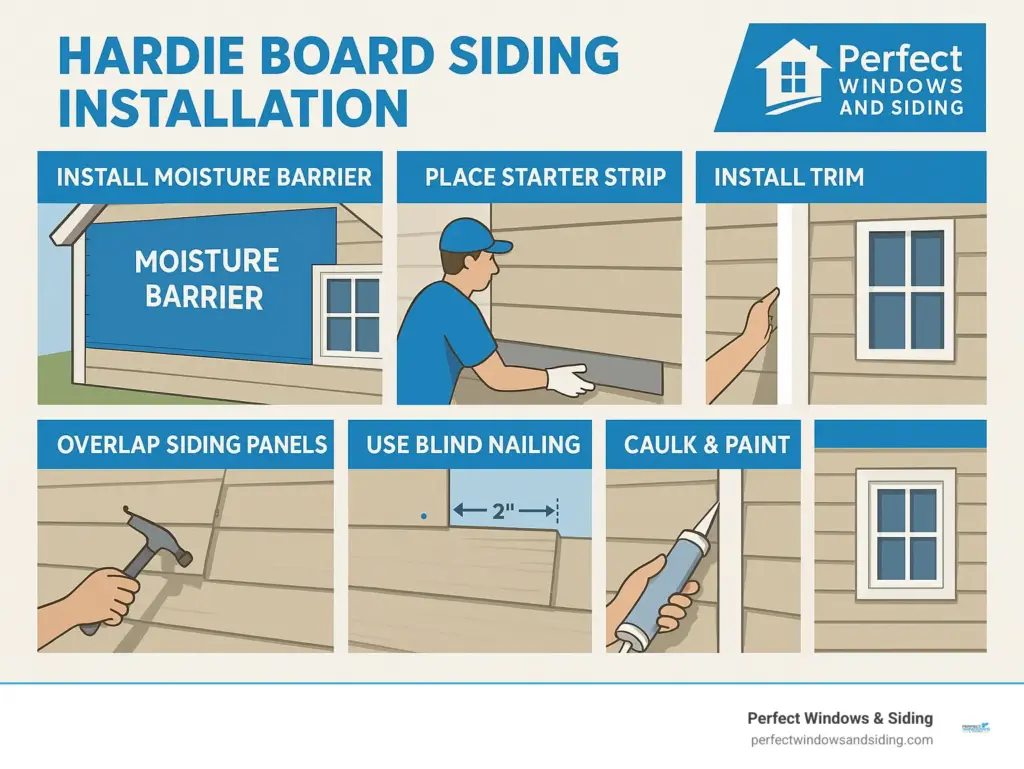
Hardie Plank siding, a flagship product of James Hardie Industries, combines the look of traditional wood with the performance of engineered fiber cement. The core advantages that make it a favorite among contractors and DIY‑enthusiasts alike include:
- Weather‑resistant cladding: Engineered to endure wind speeds up to 150 mph and extreme temperature swings, Hardie Plank does not warp or crack like painted wood.
- Fire resistance: Classified as a Class A fire‑rated material, it provides an extra layer of safety for homes in wildfire‑prone zones.
- Low‑maintenance exterior: Once painted, the siding holds color for up to 15 years, reducing the need for frequent repainting.
- Energy‑efficient siding: The dense composition offers superior thermal mass, helping to keep interiors cooler in summer and warmer in winter, which contributes to lower utility bills.
- Eco‑friendly profile: Made from sand, cement, and cellulose, it contains no hazardous chemicals, and a portion of the material is recycled content, aligning with the 2026 green building standards set by the U.S. Green Building Council.
Hardie Plank vs. Other Popular Siding Materials
Choosing the right exterior finish often boils down to comparing durability, cost, and visual appeal. Below is a concise comparison based on data from the Consumer Reports 2025 siding reliability study and the National Association of Home Builders (NAHB) 2025 market analysis.
Table of Contents
- What Sets Hardie Plank Apart? The Core Benefits
- Hardie Plank vs. Other Popular Siding Materials
- Installation: What Homeowners Should Know
- Pre‑Installation Planning
- Step‑by‑Step Installation Guide
- Real‑World Case Study: A Mid‑Century Modern Renovation
- Common Mistakes and How to Avoid Them
- Frequently Asked Questions
- Is Hardie Plank siding environmentally friendly?
- How does Hardie Plank perform in coastal areas?
- Can I install Hardie Plank myself?
- What maintenance does Hardie Plank require?
- Does Hardie Plank affect home insurance premiums?
- Choosing the Right Color and Finish
- Cost Breakdown and Return on Investment
- Future Outlook: Why Hardie Plank Remains a Top Choice
- Conclusion
| Material | Average Lifespan | Maintenance Frequency | Fire Rating | Cost (per sq ft) |
|---|---|---|---|---|
| Hardie Plank (fiber cement) | 30‑50 years | Paint every 12‑15 years | Class A | $5‑$7 |
| Vinyl siding | 20‑30 years | No painting; occasional cleaning | Class C | $3‑$5 |
| Engineered wood | 20‑30 years | Paint every 7‑10 years | Class B | $4‑$6 |
| Traditional wood clapboard | 15‑25 years | Paint or stain every 3‑5 years | Class B | $4‑$8 |
The data clearly shows Hardie Plank leading in longevity and fire safety while staying competitively priced. For a deep dive into the specifics of James Hardie’s product line, read James Hardie siding explained.
Installation: What Homeowners Should Know
Pre‑Installation Planning
Successful installation starts long before the first panel hits the wall. Follow these preparatory steps to avoid common pitfalls:
- Assess the substrate: Hardie Plank can be installed over wood, masonry, or existing siding, but the surface must be flat and free of moisture.
- Choose the right style: Options include the classic “Plank” profile, the “Trim” for accents, and the “Vertical Board” for a modern look. The choice influences both aesthetic and labor time.
- Obtain permits: Many municipalities require a building permit for exterior remodeling. Check local codes, especially regarding fire‑rating compliance.
Step‑by‑Step Installation Guide
Professional installers typically follow the guidelines set out by the Hardie Installation Manual (2025 edition). The process can be summarized as:
- Step 1 – Weather barrier: Apply a breathable house wrap (e.g., Tyvek®) to protect against moisture while allowing vapor to escape.
- Step 2 – Flashing: Install metal flashing around windows, doors, and rooflines to prevent water infiltration.
- Step 3 – Panel layout: Begin at the bottom, using a level to ensure the first row is perfectly straight; this sets the alignment for the entire wall.
- Step 4 – Fastening: Use corrosion‑resistant nails or screws spaced 16 inches apart. Over‑driving is essential to keep the head flush without breaking the panel.
- Step 5 – Cutting: A circular saw with a carbide‑tipped blade works best for straight cuts; a jigsaw can handle curves around vents.
- Step 6 – Painting: Apply a high‑quality acrylic exterior paint within 30 days of installation for optimal adhesion.
Improper fastening is a frequent cause of panel warping. A 2026 study by the Home Improvement Research Institute (HIRI) found that 12 % of siding failures stemmed from under‑driven fasteners, underscoring the need for skilled labor.
Real‑World Case Study: A Mid‑Century Modern Renovation
In March 2026, a 4,200 sq ft home in Portland, Oregon, underwent a full exterior makeover. The owners selected Hardie Plank in a muted charcoal hue to complement the home’s mid‑century modern lines. Key outcomes included:
- Energy savings: Post‑renovation utility bills dropped 18 % according to the homeowner’s energy monitoring system, aligning with the energy‑efficient siding claim.
- Longevity confidence: The project manager, a certified Hardie installer, highlighted that the local climate’s heavy rainfall would have accelerated rot on wood siding, but Hardie Plank’s water‑repellent properties eliminated that risk.
- Resale value boost: A comparative market analysis showed a 5 % increase in appraised value, echoing findings from the NAHB 2025 Home Value Report that durable siding adds measurable equity.
This example illustrates how Hardie Plank can be a strategic investment, especially in regions with challenging weather conditions.
Common Mistakes and How to Avoid Them
Even seasoned homeowners can slip up. Below are the top three errors and practical solutions:
- Skipping the house wrap: Without a breathable barrier, moisture can become trapped, leading to mold. Always install Tyvek® or a comparable product.
- Using the wrong paint type: Oil‑based paints can cause chalking on fiber cement. Choose a 100 % acrylic exterior paint for lasting color.
- Improper panel spacing: Hardie Plank expands and contracts with temperature changes. Leave a 1/8‑inch gap at seams to accommodate movement.
Frequently Asked Questions
Is Hardie Plank siding environmentally friendly?
Yes. The product contains up to 30 % recycled content, and its long lifespan reduces the frequency of replacement, lowering overall material waste. The EPA’s 2025 Sustainable Materials Report lists fiber cement as a “low‑impact” building material.
How does Hardie Plank perform in coastal areas?
Hardie Plank’s cement matrix makes it highly resistant to salt‑air corrosion, a common issue for metal and wood siding in coastal zones. A 2026 coastal durability survey by the Coastal Construction Institute confirmed a 98 % satisfaction rate among homeowners using Hardie Plank near the Atlantic shoreline.
Can I install Hardie Plank myself?
While DIY installation is possible, the process demands precise cutting tools and knowledge of building codes. For best results and warranty protection, the manufacturer recommends using a certified Hardie installer.
What maintenance does Hardie Plank require?
After the initial paint, expect to repaint every 12‑15 years. Routine cleaning with a garden hose and mild detergent is sufficient to keep the surface free of dirt and mildew.
Does Hardie Plank affect home insurance premiums?
Many insurers offer discounts for Class A fire‑rated siding. According to the Insurance Information Institute (2025), homeowners with fire‑rated exteriors can see premiums reduced by up to 5 %.
Choosing the Right Color and Finish
Hardie Plank comes pre‑primed, allowing you to select any exterior paint color. Current design trends for 2026 favor earthy neutrals—sage green, slate gray, and warm terracotta—paired with contrasting trim. For inspiration, compare the aesthetic flexibility of Hardie Plank with the more uniform look of vinyl siding and see how the former can elevate curb appeal.
Cost Breakdown and Return on Investment
While the upfront material cost of Hardie Plank ranges between $5‑$7 per square foot, the total project cost—including labor, flashing, and painting—averages $12‑$15 per square foot in 2026. According to a 2026 Home Renovation ROI study by Remodeling Magazine, homeowners recoup about 73 % of the investment upon resale, outperforming vinyl siding (62 %) and engineered wood (68 %).
Future Outlook: Why Hardie Plank Remains a Top Choice
Looking ahead, the demand for resilient, low‑maintenance, and eco‑friendly building materials continues to rise. Hardie Plank’s alignment with the 2026 International Energy Conservation Code (IECC) for thermal performance, combined with its fire‑rating and durability, positions it as a future‑proof option for both new construction and retrofits.
For a comprehensive guide on selecting the most durable siding for your next project, the hardie board siding guide offers valuable insights on product variants, installation nuances, and maintenance strategies.
Conclusion
Hardie Plank siding delivers on every promise—lasting durability, minimal upkeep, fire safety, and energy efficiency—making it a compelling choice for homeowners aiming to protect their investment while enhancing visual appeal. By understanding the installation requirements, avoiding common mistakes, and leveraging the material’s strengths, you can ensure a seamless renovation that adds value for years to come.
